1. Hands are last.
2. Hips before hands.
3. Feet before hips.
Now, what to do with Kokkyo? Is it is always there?
Sunday, February 26, 2006


Friday, February 10, 2006
Which founder?
When one searches Google images for 'osensei'
,the resulting images can be classified as "old sage" and "virile budo master".
The ratio is about 30:1 in favor of the "old sage". I think that this is a cultural choice which also reflects the popular interpretation of Aikido.
Here is my contribution to the popular vote:
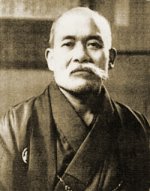 and another one:

 and another one:

Saturday, January 28, 2006
What did the old man want you to be doing?
An interesting discussion on aikidojournal following a quote from an interview with Shimizu Kenji:
"When I was actively practicing there he often came and went. When he showed up everyone immediately sat down. At first, I thought that people were being courteous toward him. However, it wasn't only that. It was also that the practices we were doing were different from what O-Sensei expected us to do. Once he lost his temper at us. No one realized that he had come and he shouted: "What you people are doing is not aikido."
This was in Hombu dojo in 1963, and I wander if there was dojo of which the Founder would have approved.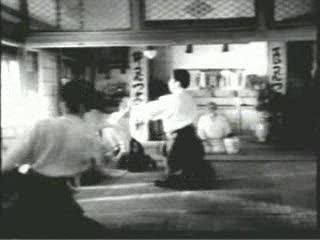
Maybe the one next to his house in Iwama, were he would actually sit, and observe the lessons conducted by Saito Morihiro?
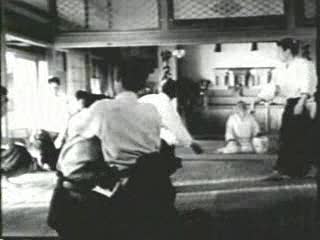
How does it feel to teach Aikido, while being watched by the Founder himself?
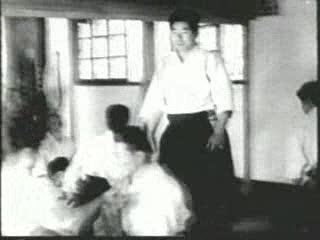
Also, how does it feel to learn Aikido, while being watched by the Founder himself?
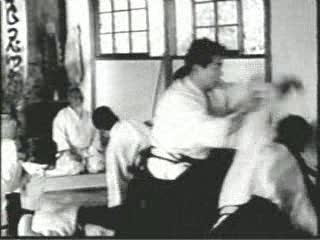
"When I was actively practicing there he often came and went. When he showed up everyone immediately sat down. At first, I thought that people were being courteous toward him. However, it wasn't only that. It was also that the practices we were doing were different from what O-Sensei expected us to do. Once he lost his temper at us. No one realized that he had come and he shouted: "What you people are doing is not aikido."
This was in Hombu dojo in 1963, and I wander if there was dojo of which the Founder would have approved.
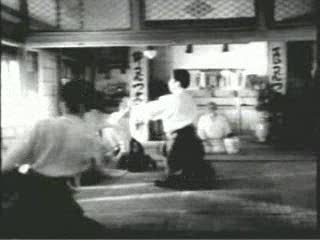
Maybe the one next to his house in Iwama, were he would actually sit, and observe the lessons conducted by Saito Morihiro?
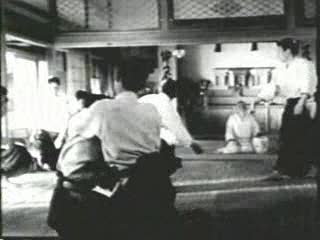
How does it feel to teach Aikido, while being watched by the Founder himself?
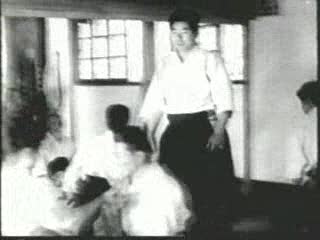
Also, how does it feel to learn Aikido, while being watched by the Founder himself?
Friday, January 06, 2006
The Myth of Zen in the Art of Archery
 The 'Zen in the Art of Archery' by Eugen Herrigel is fascinating book.
Do not read it though, without reading the 'The Myth of Zen in the Art of Archery'
article by Yamada Shoji (a freely available PDF).
Hers is a direct link,
and this is a google search.
The 'Zen in the Art of Archery' by Eugen Herrigel is fascinating book.
Do not read it though, without reading the 'The Myth of Zen in the Art of Archery'
article by Yamada Shoji (a freely available PDF).
Hers is a direct link,
and this is a google search.
The book describes the spiritual enlightenment of the author as he progresses through kyujutsu studies in 1930s Japan.
The article, on the other hand, describes Herrigen as a person who came to Japan to pursue all things Zen. Not having a solid grasp on the language or the cultural context of his studies, Herrigen sees Zen everywhere. The fact that his teacher "...had no experience in Zen nor did he unconditionally approve of Zen..." has no bearing whatsoever on Herrigen's perception of reality.
These two, are very relevant reading for people who try to make sense of Aikido. They post warning signs all over the place. Just replace kyujutsu with Aikido and Eugen Herrigel with your name, and you are all set.
Monday, December 19, 2005
Hiroshi Tada
An Aikidoka should be able to consistently cut down an opponent in the first blow. This it the true Budo aspect of Aikido. It is precisely because we are confident that we will always able to do this, this confidence gives us two things,
our strength and the ability to choose a less deadly outcome, both of which we should have as a prerequisite to our keiko practice.
our strength and the ability to choose a less deadly outcome, both of which we should have as a prerequisite to our keiko practice.
- Hiroshi Tada Shihan, 9th dan Aikikai
Tuesday, November 01, 2005
And Nishio...
 Aikido is a "budo," a "martial way," and therefore inextricably rooted in "jujutsu" or "martial technique." Yet when I look at the aikido world today,
I see very little "budo-ness" being expressed in technique, and I wonder if people haven't begun to forget these important roots. While people often say things like, "Aikido is sword technique..." and "throws and pins are actually strikes....," there is rarely any explanation of such ideas.
There are even some who claim that aikido has no need for things like striking and weapons techniques. In many settings these days, aikido is becoming little more than a kind of health exercise pursued by the elderly and women and children.
Aikido is a "budo," a "martial way," and therefore inextricably rooted in "jujutsu" or "martial technique." Yet when I look at the aikido world today,
I see very little "budo-ness" being expressed in technique, and I wonder if people haven't begun to forget these important roots. While people often say things like, "Aikido is sword technique..." and "throws and pins are actually strikes....," there is rarely any explanation of such ideas.
There are even some who claim that aikido has no need for things like striking and weapons techniques. In many settings these days, aikido is becoming little more than a kind of health exercise pursued by the elderly and women and children.
- Shoji Nishio, 8th dan Aikikai
Subscribe to:
Posts (Atom)


